
Enjoy the celebrations. Keep your perspective.
From Thanksgiving dinner to a Christmas gathering or New Year buffet, small habits can leave room for food you love.
Explore the tips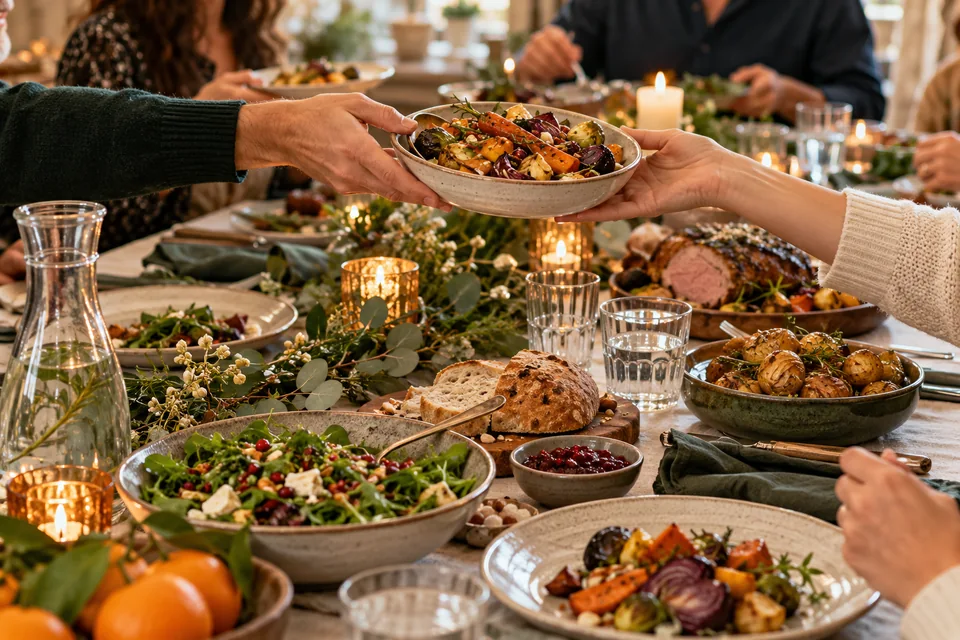
Your celebrations, your traditions
Thanksgiving in the US, Christmas dinner in Britain or Ireland, and summer celebrations in Australia or New Zealand bring different foods and routines. Adapt these ideas to your own table; a winter walk is not everyone's holiday tradition.
Small ideas. Plenty of enjoyment.
These eight suggestions adapt selected everyday ideas from David Fäh’s existing “Losing weight without stress” article. The holiday examples are by the Smart BMI editorial team, not individually tested holiday interventions. David Fäh
Choose the favourites you really want
At a Thanksgiving spread, mince-pie plate or buffet, look first. Choose a helping of what appeals to you and enjoy it sitting down.
Pause before seconds
Put your cutlery down briefly, enjoy the conversation and check whether you are still hungry. You can still have more.
Make room for vegetables
Offer vegetables or salad alongside the roast, barbecue or other centrepiece. Aim for variety at the table.
Put water within reach
A carafe on the table makes water an easy option. Unsweetened tea can also accompany festive treats.
Serve treats intentionally
Put chocolates, cookies or sweets on a plate. The rest of the supply does not need to sit open beside you all day.
Move together if it suits you
Suggest a walk before or after the gathering. An accessible movement break can be an alternative for people with limited mobility.
Plan the shopping
Check guest numbers and what you already have. Plan portions and how you will use leftovers.
Return to your usual routine
After a rich dinner, return to regular, varied meals. One celebration does not call for a punishment workout or a day of going hungry.

Everyday life between celebrations
Plan simple, varied meals between gatherings. Leftover roast vegetables can become soup or a side for lunch. A shared walk, in weather that suits you, can become part of the occasion. You do not need to earn your food through exercise.
What the research shows
In a British randomised trial of 272 adults, follow-up weight was on average 0.49 kg lower after a package of regular weighing, behavioural tips and food-to-activity calorie comparisons than in the comparison group. Follow-up lasted 4–8 weeks. This does not establish the effect of any single tip or of Smart BMI. Mason et al., 2018 · BMJ
A Swiss observational study of 15,936 participants, co-authored by David Fäh, found associations between dietary patterns and long-term mortality. It did not study festive meals and cannot establish causation or predict your personal risk. Krieger et al., 2018 · Nutrients
This new guide was written by the Smart BMI editorial team and has not been medically reviewed by David Fäh. Research, his existing everyday advice and our seasonal examples are separate sources of guidance.
Put your weight in perspective
Smart BMI adds an age- and sex-based comparison to BMI. It cannot rate a meal, distinguish water from body fat or provide a diagnosis. A lower number is not automatically a better goal.
Questions about festive eating
Do I need to give up my favourite holiday foods?
You can make room for favourite dishes. These ideas support choices and routines; they are not a list of forbidden foods or a promise of weight loss.
Should I calculate my BMI after every holiday meal?
No. The calculator cannot assess an individual meal. If tracking weight is helpful for you, compare measurements over a longer period under similar conditions. If weighing causes distress or you have an eating disorder, personalised professional support is appropriate.
Has David Fäh specifically reviewed these tips?
No. We adapt selected ideas from his existing article and link the sources. He has not newly medically reviewed this seasonal guide or its translations.